
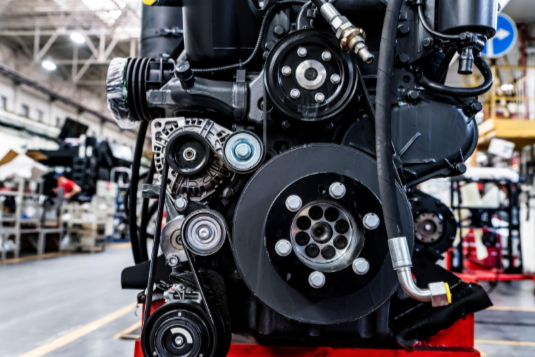


Honda engines have achieved legendary status among automotive enthusiasts and everyday drivers alike. The company’s engineering philosophy, emphasizing high-revving performance combined with exceptional reliability, has produced some of the most celebrated powerplants in automotive history. For those seeking replacement engines or performance upgrades, Japanese Domestic Market sourcing opens doors to exceptional opportunities.
Honda’s Engineering Excellence
Honda’s approach to engine design distinguishes it from competitors in fundamental ways. The company’s commitment to naturally aspirated power led to developments like VTEC variable valve timing, which revolutionized how small displacement engines could produce big power. This innovative spirit permeates every aspect of Honda engine design, from combustion chamber geometry to materials selection.
The precision manufacturing that characterizes Honda engines begins with casting and machining processes that achieve remarkably tight tolerances. Block and head surfaces meet specifications measured in thousandths of inches, ensuring proper gasket sealing and optimal coolant flow. Crankshaft journals receive finishing that minimizes bearing wear and promotes longevity.
Internal rotating assembly components demonstrate similar attention to detail. Connecting rods feature optimized beam profiles that minimize weight while maximizing strength. Pistons incorporate sophisticated ring packages that control oil consumption while allowing break-in. These details accumulate into engines that routinely exceed 200,000 miles without major intervention.
The Appeal of JDM Honda Powerplants
Japanese market Hondas sometimes received engine variants unavailable in North America. Higher compression ratios, different intake manifold designs, and unique calibrations distinguished these units from their export counterparts. Performance enthusiasts particularly value certain JDM engine codes that offer factory-engineered improvements over standard configurations.
Finding a quality JDM Honda engine for sale provides access to these specialized variants while also offering practical advantages. The Japanese used parts market features engines with significantly lower mileage than typically available domestically. Japan’s vehicle inspection system encourages frequent vehicle replacement, meaning many Honda engines enter the secondary market barely broken in.
The combination of Honda reliability and low actual usage creates compelling value propositions. An engine with 50,000 kilometers of careful Japanese driving potentially offers more remaining life than a domestic unit with twice the mileage accumulated under harsher conditions. Understanding this dynamic helps buyers appreciate why JDM sourcing has grown so popular.
Popular Honda Engine Families
The B-series engines established Honda’s performance reputation during the 1990s. Featuring dual overhead cams and the innovative VTEC system, B-series powerplants demonstrated that small displacement could produce serious horsepower. The B16A and B18C variants particularly achieved cult status among enthusiasts who continue seeking these engines for swap projects.
D-series engines served as Honda’s economy-focused option, prioritizing fuel efficiency and low-end torque over outright performance. Despite humbler specifications, D-series engines exhibit the same Honda durability that characterizes the entire lineup. Many D-series engines have accumulated astronomical mileage while requiring only routine maintenance.
The K-series represented Honda’s next generation of performance engines, incorporating lessons learned from earlier designs while adding technologies like drive-by-wire throttle and improved VTEC systems. K20 and K24 variants power everything from Civics to Accords, with swap compatibility making them popular choices for performance projects.
More recent Earth Dreams engine technology showcases Honda’s continuing innovation. Direct injection, further refined VTEC systems, and improved thermal efficiency distinguish these modern powerplants. As vehicles equipped with these engines enter the used market, JDM sourcing provides access to low-mileage examples.
Evaluating Engine Condition
Assessing used engine quality requires attention to multiple factors. Compression testing reveals cylinder sealing integrity and provides insight into ring and valve condition. All cylinders should produce readings within manufacturer specifications with minimal variation between them. Low or uneven compression indicates potential issues requiring further investigation.
Leak-down testing offers complementary information about engine sealing. This procedure identifies whether compression losses occur past rings, valves, or head gaskets. Combined with compression data, leak-down results paint a comprehensive picture of engine mechanical condition.
External inspection reveals maintenance history indicators. Oil leaks, coolant residue, and general cleanliness all suggest how previous owners cared for the engine. Heavy deposits or evidence of neglect warrant caution, while clean, well-maintained appearance suggests conscientious ownership.
Compatibility and Swap Considerations
Honda’s modular approach to engine design facilitates swaps between different models and generations. However, successful projects require attention to numerous details. Wiring harness configurations, ECU requirements, and accessory mounting points all affect swap complexity and cost.
Transmission pairing deserves careful consideration. While many Honda engines mate to various transmission options, specific combinations work better than others. Flywheel compatibility, starter positioning, and clutch specifications all factor into successful manual transmission pairings. Automatic applications require torque converter matching and electronic control compatibility.
Cooling system requirements may differ between original and swap applications. Radiator sizing, thermostat housing orientation, and hose routing all potentially require modification. Anticipating these needs during project planning prevents surprises during installation.
Exhaust manifold and header configurations present another variable. Different engine variants utilize various exhaust exit positions and flange patterns. Aftermarket headers designed for specific swaps often simplify this aspect, though fabrication may be required for less common combinations.
The Economics of Honda Engine Replacement
Engine replacement costs vary significantly depending on sourcing decisions. New crate engines, when available, command premium prices that may exceed the value of older vehicles. Domestic rebuilds offer middle-ground pricing but require trusting unknown rebuild quality. JDM engines frequently provide the best combination of quality and value.
Labor costs for engine installation remain relatively consistent regardless of engine source. This reality means parts savings from JDM sourcing translate directly into overall project cost reduction. For vehicles worth preserving, this economic advantage makes JDM engines particularly attractive.
Consider the typical scenario of a high-mileage Civic or Accord needing engine replacement. A quality JDM engine often costs a fraction of new or rebuilt alternatives while potentially offering superior condition. The mathematics favor JDM sourcing for owners seeking to maximize value while maintaining quality.
Finding Reputable Suppliers
The JDM parts market includes vendors ranging from excellent to questionable. Identifying trustworthy suppliers protects buyers from problematic transactions. Established businesses with physical locations, verifiable histories, and positive customer feedback merit consideration over anonymous online sellers.
Quality suppliers conduct thorough inspections and provide meaningful information about their inventory. Compression test results, mileage documentation, and detailed photographs help buyers evaluate specific engines. Vendors who offer this transparency demonstrate professionalism that extends to other business practices.
Warranty coverage indicates supplier confidence in inventory quality. While used parts carry inherent uncertainty, reputable vendors stand behind their products with warranty terms that protect buyers against defective units. Comparing warranty offerings helps distinguish confident suppliers from those merely moving inventory.
Installation Success Factors
Professional installation typically produces the best outcomes for engine replacement projects. Experienced Honda specialists understand model-specific nuances that affect installation success. Their familiarity with common challenges helps avoid problems that might trap less experienced installers.
Proper break-in procedures maximize engine longevity. Even low-mileage JDM engines benefit from careful initial operation that allows components to establish optimal wear patterns. Following manufacturer recommendations regarding initial operation protects the investment in quality parts.
Supporting maintenance alongside installation makes practical sense. Timing belt or chain service, water pump replacement, and accessory drive component renewal all represent good practice during engine installation. Addressing these items prevents future failures and additional labor expenses.
The Honda engine market continues providing excellent options for vehicle owners worldwide. Understanding available options and sourcing considerations empowers buyers to make decisions that keep their Hondas performing reliably for years ahead.